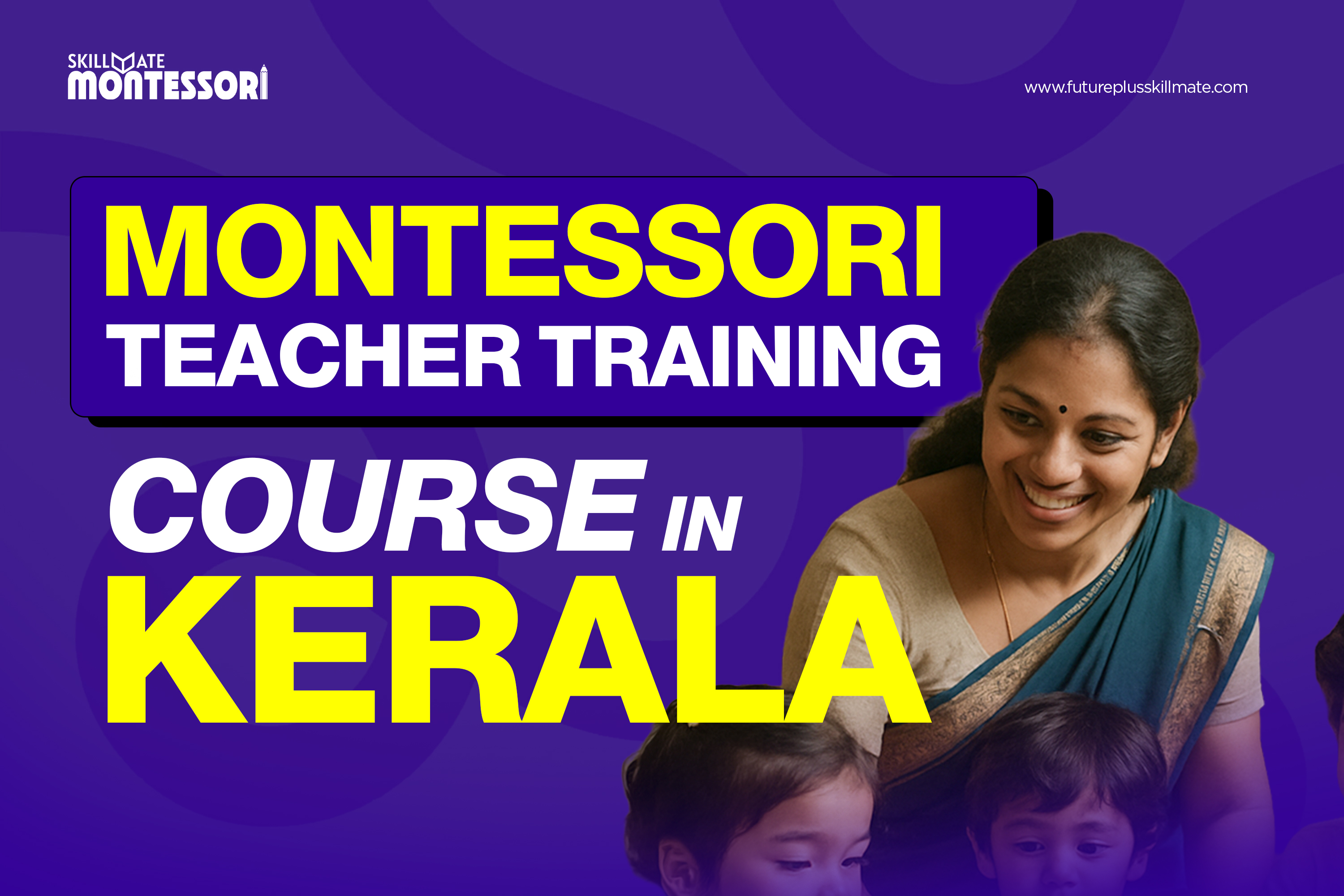
The demand for qualified Montessori teachers is growing rapidly across Kerala as parents and schools increasingly recognize the importance of quality early childhood education. If you are passionate about working with children and want to build a meaningful career in teaching, enrolling in a Montessori Teacher Training Course can be the perfect choice.
Future Plus Skillmate in Kozhikode offers a comprehensive Montessori Teacher Training Course designed to equip aspiring educators with the skills, knowledge, and practical experience required to succeed in modern classrooms.
What is a Montessori Teacher Training Course?
A Montessori Teacher Training Course prepares educators, parents, and caregivers to understand and apply the Montessori method of education developed by Dr. Maria Montessori. The Montessori approach focuses on child-centered learning, independence, creativity, and hands-on activities that encourage natural development.
Unlike traditional teaching methods, Montessori education allows children to learn at their own pace while developing confidence, problem-solving skills, and curiosity.
What Will You Learn in the Course?
The Montessori course at Future Plus Skillmate covers all the essential areas required for becoming a successful Montessori educator, including:
- Montessori philosophy and teaching principles
- Child psychology and child development
- Practical life activities
- Sensorial education techniques
- Language development methods
- Early mathematics concepts
- Lesson planning and classroom management
- Observation and assessment techniques
- Hands-on training with Montessori materials
This practical approach ensures that students are prepared for real classroom environments.
Different Levels of Montessori Training
Infant and Toddler Program (0–3 Years)
Focuses on early brain development, emotional bonding, sensory activities, and motor skills development.
Early Childhood Program (3–6 Years)
Covers language skills, mathematics, practical life exercises, and sensorial learning activities.
Elementary Program (6–12 Years)
Introduces science, geography, history, arts, and advanced learning techniques suitable for older children.
Adolescent Program (12–18 Years)
Some advanced Montessori programs also include leadership, entrepreneurship, and life skills training.
Course Duration
The duration of Montessori courses varies depending on the program selected:
- Diploma Courses: 6 Months to 1 Year
- Advanced Diploma Programs: 1 to 2 Years
Flexible learning options make it suitable for students, homemakers, and working professionals.
Eligibility Criteria
One of the biggest advantages of Montessori teacher training is its accessibility.
You can join if you are:
- A Plus Two graduate
- A degree holder seeking teaching opportunities
- A homemaker interested in restarting your career
- A parent who wants to understand child development better
- An aspiring preschool teacher
Career Opportunities After Montessori Training
Completing a Montessori course opens doors to multiple career opportunities such as:
- Montessori Teacher
- Preschool Teacher
- Early Childhood Educator
- Child Care Center Coordinator
- Montessori Trainer
- Play School Administrator
- Educational Consultant
Many graduates also choose to start their own preschool or daycare center.
Why Choose Future Plus Skillmate for Montessori Training in Kerala?
Future Plus Skillmate offers career-oriented training with a focus on practical learning and professional development.
Key Benefits
- Industry-focused curriculum
- Experienced trainers
- Practical classroom exposure
- Flexible learning schedules
- Certification upon completion
- Student support and guidance
- Convenient location in Kozhikode
The institute focuses on building job-ready skills that help learners confidently enter the education sector.
Start Your Teaching Career Today
Early childhood education is one of the most fulfilling and stable career paths available today. A Montessori Teacher Training Course not only helps you build a professional career but also allows you to make a positive impact on children's lives during their most important developmental years.
If you are looking for the best Montessori Teacher Training Course in Kerala, Future Plus Skillmate provides the right combination of expert guidance, practical learning, and professional certification to help you succeed.
Take the first step towards becoming a qualified Montessori educator and build a rewarding future in education.